
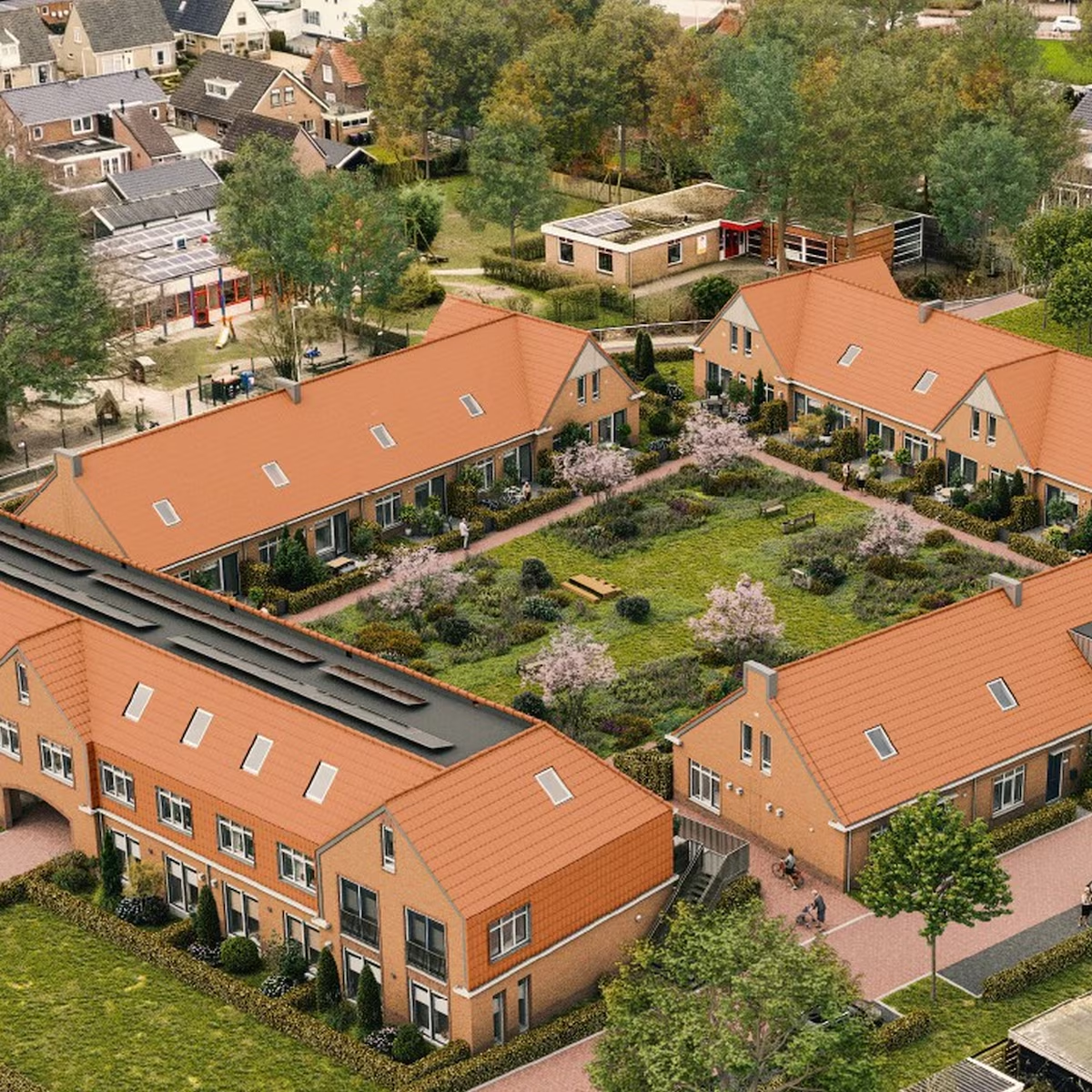
How can we design homes today that will still meet people’s needs in twenty or thirty years? The answer goes beyond square metres. It’s about understanding how people’s needs change throughout their lives, the communities they live in and the importance of collaboration. We spoke to Flore Rens, Innovation Strategist at Fronteer, about what it takes to create housing that’s fit for the future.
In the Netherlands, the housing debate tends to focus on numbers. Understandably so, given the scale of the housing shortage, but building more homes doesn’t necessarily answer a bigger question: how do we want to live in the future?
Consider someone who wants to remain independent as they get older, but whose home is no longer suited to their needs. Addressing this challenge isn’t just about building new homes. It’s also about rethinking and adapting the homes we already have.
A different starting point
Creating housing that’s fit for the future means asking a different question. Rather than focusing solely on how many homes we need, we should be asking how we can help people live independently for as long as possible.
Much of the housing sector is organised around categories such as social housing, mid-market rental, private rental and home ownership. These are useful distinctions, but they tell us very little about the people who actually live in these homes. A first-time buyer and someone in their sixties might both be looking for a smaller flat, for example, yet have completely different needs and expectations.
Thinking beyond four walls
That’s why we need to think beyond individual homes and start looking at housing solutions more broadly. And yes, that brings new challenges. Who pays for the shared spaces? How do you design a building to accommodate care technologies that don’t exist yet? And how do you create a community that genuinely works?
Homes and neighbourhoods need to be able to adapt, whether that’s to new technologies, changing accessibility requirements or evolving care needs. And that means thinking ahead. Property development takes years, so anything we start planning today is ultimately being designed for a future we can’t fully predict. The goal isn’t to get every prediction right. It’s to create places that can adapt to whatever comes next.
More than bricks and mortar
We’re already seeing new approaches to combining private and shared living spaces. A smaller home, for example, might come with access to communal areas, shared facilities and opportunities to connect with neighbours.
As more people look to remain independent for longer, while pressure on professional care services continues to grow, communities, technology and informal support networks will have an increasingly important role to play. But simply adding a communal space doesn’t create a community. And technology can never replace human connection. The real opportunity lies in bringing together thoughtful design, services, technology and the social connections that make a place work.
And there’s another important consideration: homes need to be appealing, not just practical. After all, why would someone choose to move if the alternative doesn’t feel like a step forward? A home can be designed to accommodate changing care needs without looking like a care facility. A community can offer support without feeling institutional. And a flexible building can still have plenty of character.
Innovation takes collaboration
Ultimately, this changes the question we’re asking. Instead of what should we put into this building?, we need to ask what role could this place play in the wider community? Property developers, local authorities, healthcare providers, technology companies, investors and residents all have a part to play. Each brings a different perspective, and no single organisation can tackle this challenge alone.
At Fronteer, we believe this is where real innovation happens: bringing different perspectives together to develop new housing concepts that work for people today, while remaining flexible enough to meet the needs of tomorrow. Because if we’re designing homes to last for decades, we can’t base every decision on what people need right now.
Fronteer is currently working with Rabobank and a broad coalition of partners to explore new approaches to future-proof housing and turn these ideas into practical solutions.
